
A few days ago, Dad reminded me that just outside our old house there was a hawthorn tree that flowered every spring.
Once he started talking about it, I could remember it being there, just beyond our garden fence. Being a child, I never paid much attention to it. I was too busy climbing trees to notice whether they flowered or not!
Dad remembered it as a blaze of frothy white blossom. He also told me that every seven years or so the flowers turned pink. I have to admit, I don’t remember that at all, and I’m not sure how true it is. Perhaps his memory had somehow become intertwined with some of the folklore surrounding the hawthorn tree.
Whatever the truth about the pink blossom, our conversation prompted me to take a closer look at the trees growing around the neighbourhood where I live now.
And that’s when I discovered that one of the streets near me is lined with hawthorn trees.
What is a May tree?
I had walked past these trees countless times without really stopping to look at them. This time, I did.
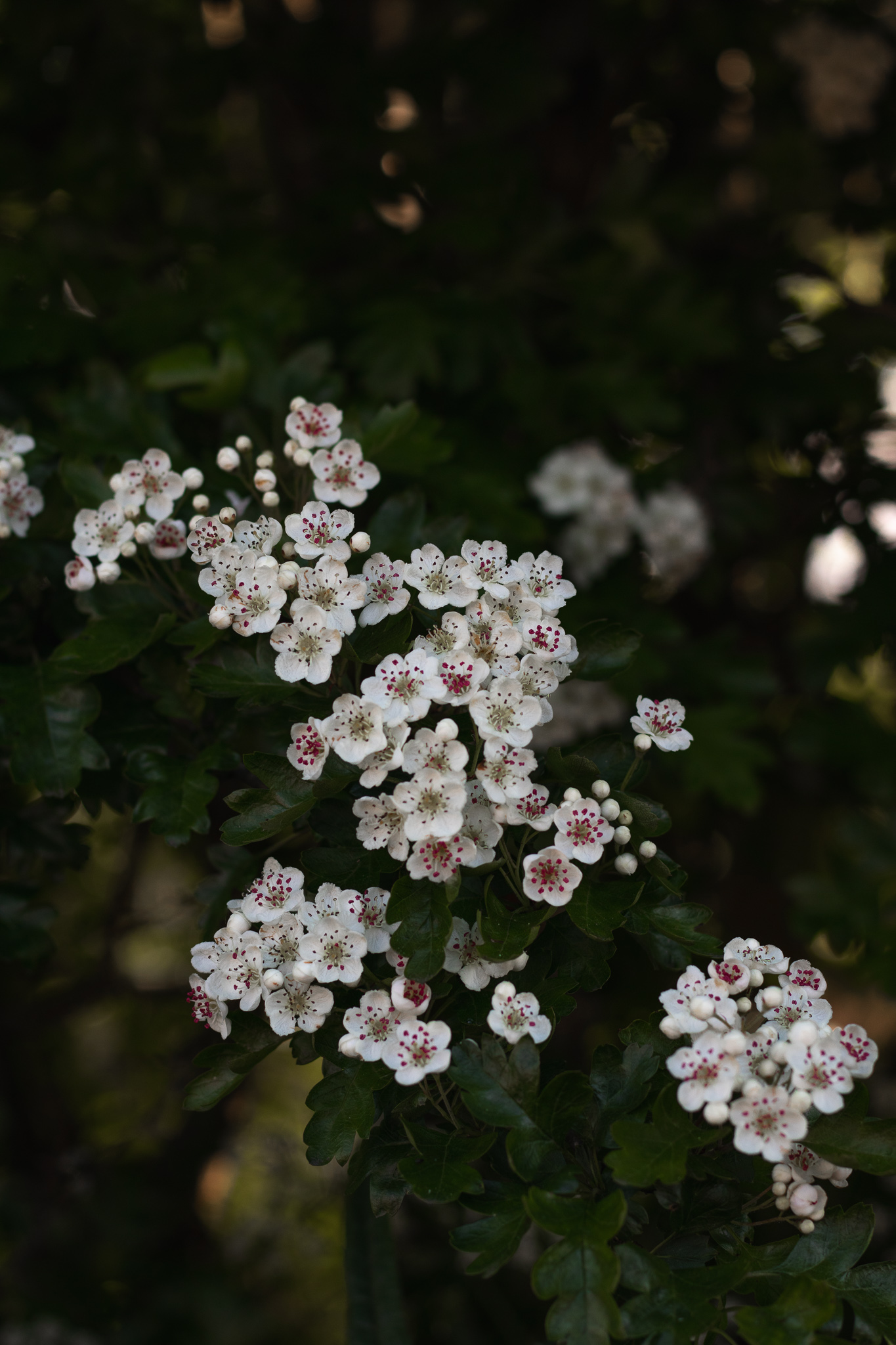
Most were covered in beautiful white blossom, but some had flowers with a delicate blush of pink, with deeper pink colouring around the edges.
It was only when I started looking into them that I discovered that the hawthorn is also known as the May tree.
The name makes perfect sense. Hawthorn is one of the trees whose blossom traditionally appears in spring, often around April and May, and its flowers have long been associated with the arrival of warmer weather and the changing of the seasons.
The common hawthorn is Crataegus monogyna, a native British tree that is particularly familiar in hedgerows, woodland and scrub. It can also be found growing along roadsides and in urban areas.
What does a May tree look like?
If you’ve ever wondered what a May tree looks like, the easiest time to spot one is when it is in flower.
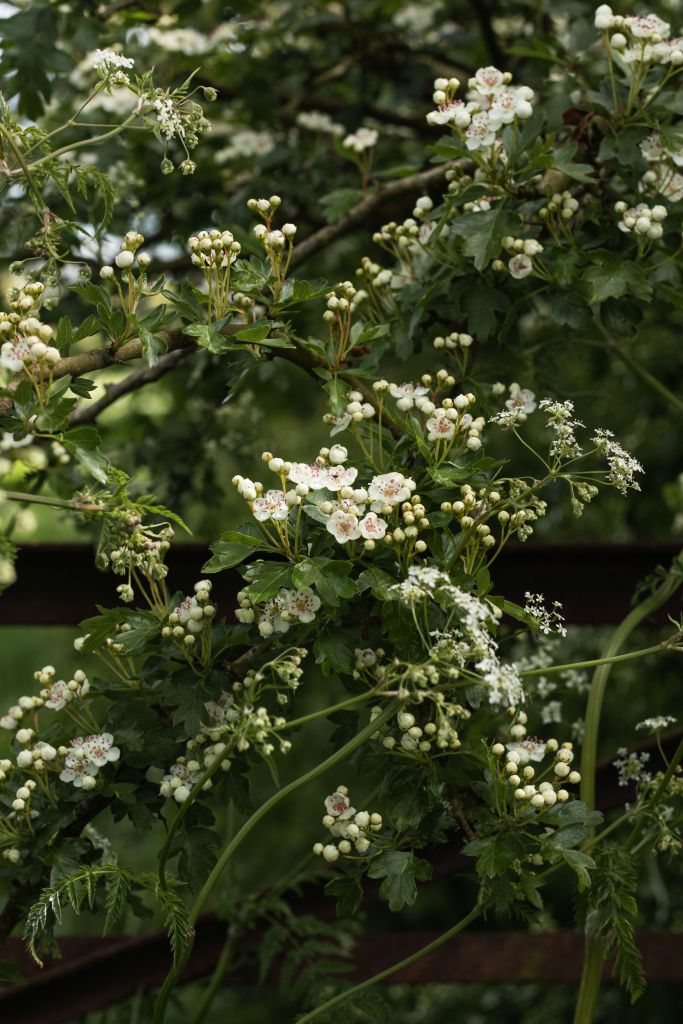
Hawthorn has small, deeply lobed green leaves and thorny branches. In spring, clusters of small flowers appear, usually white but sometimes pink. The flowers have five petals and are often strongly scented.
Later in the year, the flowers give way to small, deep red fruits known as haws.
The trees can grow to around 15 metres tall, although they are also commonly found as smaller, bushier trees or as part of a hedgerow.
One useful way of distinguishing hawthorn from blackthorn is to look at the leaves. Hawthorn flowers after its leaves have appeared, whereas blackthorn generally flowers before its leaves emerge.


Why is hawthorn called the May tree?
Hawthorn has a long association with May Day and the arrival of summer.
The Woodland Trust describes hawthorn as the only British plant named after the month in which it flowers. Its blossom traditionally marked the end of winter and the beginning of summer, and it became closely associated with May Day celebrations
There is also an old saying:
“Ne’er cast a clout till May is out.”
It is often interpreted as meaning that you shouldn’t put away your winter clothes until the end of May. However, the saying is thought to refer not to the end of the month but to the flowering of the hawthorn — in other words, don’t discard your warm clothes until the May blossom appears.
White or pink May tree blossom?
This was the part of my Dad’s story that originally made me curious.
I couldn’t remember ever seeing the hawthorn outside our old house covered in pink flowers, but when I started paying attention to the trees near me, I realised that hawthorn blossom isn’t always pure white.
The flowers are usually white, but they can also be pink or pink-tinged.
So perhaps Dad wasn’t imagining it after all.
I’m still not convinced about the idea that the blossom turns pink every seven years, though. That sounds much more like the sort of folklore that grows up around a familiar old tree.
The folklore of the May tree
Hawthorn has a fascinating history of folklore and superstition.
It has long been associated with fertility, protection and May Day traditions. Hawthorn was traditionally connected with Maypoles and May Day garlands, while its blossom also appears in stories and traditions surrounding fairies and the Green Man.
There was also a widespread belief that hawthorn blossom should not be brought into the house. The Woodland Trust notes that this superstition was partly connected to the unpleasant smell of the flowers and their historical association with death and the Great Plague.
It’s fascinating to think that an ordinary tree growing beside a road or in a hedgerow can have so much history attached to it.
Looking at the May trees differently
I walk past these trees all the time.
But until I stopped to look, I hadn’t really noticed how pretty the blossom was.
Perhaps that’s what I like most about this story. A conversation with Dad about a tree from my childhood made me notice something that had been right in front of me all along.
Now, every spring when the hawthorn trees burst into flower, I’ll notice them.
And I’ll probably think of that old tree beyond our garden fence too.
Whether its blossom really did turn pink every seven years remains to be seen!
Paula

Love!! ❤️🌸
Thank you 😊😊
Beautiful!!💕
Thank you 😊😊
Lovely photos. I love to see the hawthorn in bloom and funnily enough as I drove home this afternoon I noticed that many of them were tinged in pink and wondered if it happens every year and I just hadn’t noticed. My granny and mum used to say, when we were children, ne’er cast a clout til May is out. I used to think it meant the month of May but it actually means the may (hawthorn) tree. http://www.bbc.co.uk/blogs/wales/entries/28a159dd-e4b9-3c58-90dc-4230e150c8cf
I think the turning pink happens in more mature trees. I didnt know that the saying. Hopefully now the May is out we can finally put our winter clothes away but with our weather who knows !!
Lol … true. We live in hope!